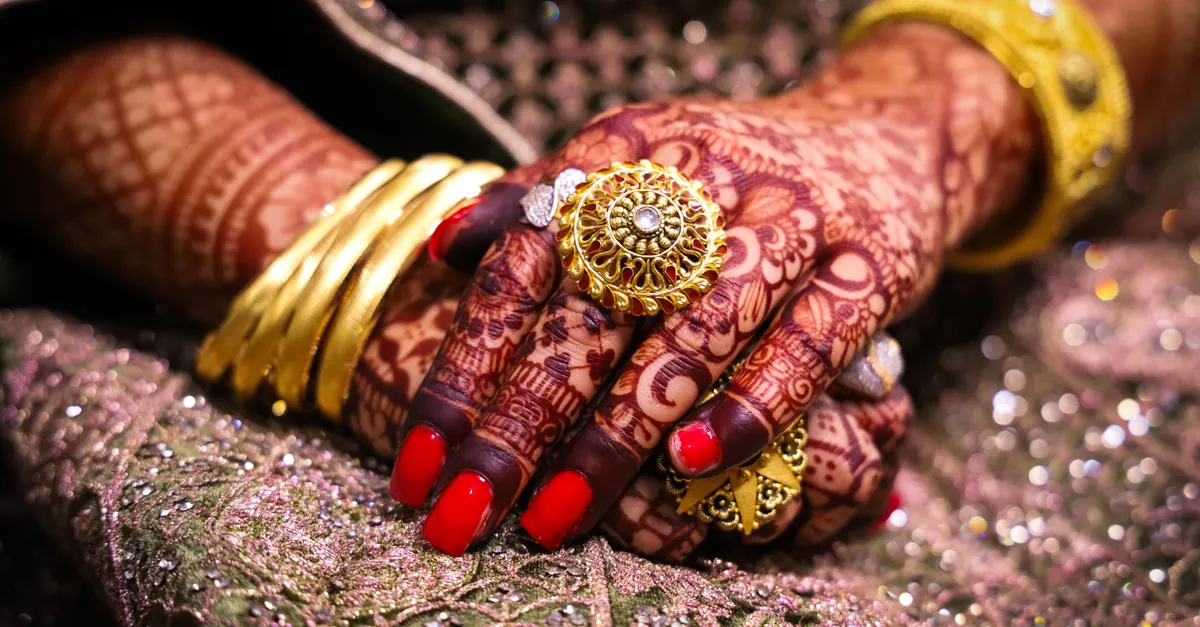
TL;DR: Streedhan is everything a woman receives as her own: gifts of jewellery, cash, and property given to her before, at, or after marriage, by her family, her husband, his family, or anyone else. Under Section 14 of the Hindu Succession Act, 1956 she holds it as full owner, not as a limited owner, which means her husband and his family have no title to it. The Supreme Court has said the same thing in one voice since 1985: in Pratibha Rani v. Suraj Kumar, in Rashmi Kumar v. Mahesh Kumar Bhada, and most recently in Maya Gopinathan v. Anoop S.B. (2024 INSC 334), where it ordered a husband to pay Rs 25 lakh for misappropriating 89 sovereigns of his wife’s gold. You can recover streedhan four ways: a criminal complaint for criminal breach of trust, a civil suit, an application under the Domestic Violence Act, and a claim in matrimonial proceedings. And delay usually does not defeat the claim, because withholding streedhan is treated as a continuing wrong. This guide explains what counts, how it differs from dowry, and how each remedy works.
On this page
- What streedhan actually is
- Section 14 and the idea of absolute ownership
- Streedhan is not dowry: the distinction that matters
- Custody is not ownership: who holds it and who owns it
- The cases that settled the law
- Your four routes to recover streedhan
- The limitation question: why delay rarely kills the claim
- Proof: what you must show and the standard that applies
- Streedhan versus a share in ancestral property
- How Niyam helps you research streedhan claims
- Frequently asked questions
What streedhan actually is
Streedhan is an old idea with a sharp modern edge. The word means, literally, a woman’s wealth. It covers property that becomes hers absolutely, given to her at any point in her life, by anyone, for her own benefit.
The categories are wide. They include the gifts a bride receives at her wedding: gold and jewellery, cash, clothes, and ornaments handed to her by her parents, her in-laws, her husband, and the wider circle of relatives and guests. They also include gifts made to her before the marriage, gifts during the marriage, gifts after it, property she earns by her own skill or work, property she buys, and property she inherits. Even gifts from a stranger fall in, as long as they were given to her.
This is not a vague custom. It is written into statute. The Explanation to Section 14 of the Hindu Succession Act lists property acquired by a female Hindu “by gift from any person, whether a relative or not, before, at or after her marriage” as part of the property she holds as full owner. The same Explanation pulls in property she acquires by her own skill or exertion, by purchase, by inheritance, or “in any other manner whatsoever.”
The practical point for a woman facing divorce or separation is simple. The jewellery in the locker, the gold worn at the wedding, the cash gifts, the fixed deposits made in her name: if these were given to her, they are hers. They did not become her husband’s because she lived in his house. They did not become “family property” because his mother kept them in a safe. The law has been clear on this for decades, and it has only grown clearer.
Section 14 and the idea of absolute ownership
To understand why streedhan is so well protected, you have to see what Section 14 of the Hindu Succession Act, 1956 did.
Before 1956, a Hindu woman often held property as a “limited owner.” She could enjoy it during her lifetime, but she could not freely dispose of it, and it reverted to the heirs of the last full owner when she died. Her control was conditional. Her ownership was, in a real sense, on loan.
Section 14(1) ended that. It says that any property possessed by a female Hindu, whether acquired before or after the commencement of the Act, “shall be held by her as full owner thereof and not as a limited owner.” In one sentence, Parliament converted limited estates into absolute ones. A woman who possessed property no longer held it on sufferance. She held it the way any owner holds anything, with the full right to use it, sell it, gift it, or leave it to whoever she chooses.
There is a limit built into the section, and it is worth knowing. Section 14(2) carves out an exception: where property is given by gift, will, instrument, decree, or award that itself prescribes a “restricted estate,” the restriction stands and the absolute-ownership rule does not override it. So if a deed deliberately gives a woman only a life interest, that deed controls. But ordinary streedhan, the gold and cash and gifts handed to a bride with no strings attached, carries no such restriction. It is hers outright.
The result is that streedhan sits on a strong statutory foundation. It is not protected merely by judge-made principle, though the judges have been firm. It rests on a provision of central law that has stood for nearly seventy years and has been read expansively the whole time.
Streedhan is not dowry: the distinction that matters
People use “dowry” and “streedhan” as if they mean the same thing. In law, they do not, and the difference can decide a case.
Dowry, as defined in the Dowry Prohibition Act, 1961, is property or valuable security given or agreed to be given in connection with a marriage as a condition of the marriage. It is, in essence, a demand. Giving and taking dowry is a criminal offence. The whole transaction is one the law condemns.
Streedhan is the opposite in spirit. It is a voluntary gift to the woman, for her, with no demand and no condition. The bride’s own jewellery, the gifts pressed into her hands by her relatives, the money her father settles on her: these are not dowry. They are her property.
Where the two worlds meet is in Section 6 of the Dowry Prohibition Act. It says that where any dowry is received by a person other than the woman for whose marriage it is given, that person must transfer it to the woman, and pending that transfer holds it in trust for her. The section sets time limits, and failure to transfer is itself punishable with imprisonment of not less than six months extending to two years. The effect is striking. Even property the law calls “dowry,” if it was received by the husband or his family rather than by the bride, has to be handed over to her. The statute routes it back to the woman.
So the practical position, after Section 6 of the Dowry Prohibition Act and the Supreme Court’s streedhan rulings read together, is that property given at or around a marriage tends to end up where the law wants it: with the woman. The criminal stigma attaches to dowry. The ownership attaches to her.
| Question | Streedhan | Dowry |
|---|---|---|
| Given voluntarily as a gift to the woman? | ✓ Yes, that is its defining feature | ✗ No, it is demanded or agreed as a condition of marriage |
| Legal to give and receive? | ✓ Yes, gifts to a woman are lawful | ✗ No, giving and taking is an offence |
| Who owns it? | ✓ The woman, absolutely | ✗ Often taken by the husband’s family, but Section 6 routes it back to her |
| Can the woman dispose of it freely? | ✓ Yes, full owner under Section 14 HSA | Partial, once transferred to her under Section 6 it becomes hers |
| Husband or in-laws have a title to it? | ✗ No, never | ✗ No, they hold dowry in trust for the woman |
If you are advising a client, label the assets carefully. A demand-linked transfer is dowry, with all the criminal consequences that follow for those who took it. A gift to the woman is streedhan, hers to reclaim. The same gold chain can be described either way, and the framing shapes which provisions you reach for. For the criminal side of a matrimonial dispute, the related law on the misuse and quashing of cruelty complaints is set out in Section 498A: misuse, safeguards, and quashing.
Custody is not ownership: who holds it and who owns it
The single most common mistake in these disputes is to treat possession as ownership. It is not.
A bride almost always hands her jewellery to someone for safekeeping. On the wedding night or soon after, the gold often goes into the husband’s custody or his mother’s locker. This is normal. It does not change who owns it. The husband becomes, at most, a custodian. He holds the property for her, the way a bank holds money in a locker. The locker does not own the gold.
The Supreme Court has put this in plain words. In Maya Gopinathan v. Anoop S.B., Justice Dipankar Datta, writing for the Court, held that “stridhan property does not become a joint property of the wife and the husband and the husband has no title or independent dominion over the property.” The Court allowed that a husband may use the property in a time of distress, but said he carries “a moral obligation to restore the same or its value to his wife.”
The older statement is just as blunt. In Rashmi Kumar v. Mahesh Kumar Bhada, the Court said of a woman’s streedhan: “It is her absolute property with all rights to dispose of at her own pleasure. He has no control over her stridhana property.” That line has been quoted and re-quoted ever since.
Why does this matter so much? Because once you accept that the husband is only a custodian, the legal consequences follow naturally. A custodian who refuses to hand back what he was given to hold is not exercising his own rights. He is keeping someone else’s property. And keeping someone else’s property, after being entrusted with it and then refusing to return it, is the textbook definition of criminal breach of trust. That is the doctrinal bridge between a marital quarrel over jewellery and a criminal offence.
The cases that settled the law
Streedhan law is rare in one respect. The Supreme Court has been consistent on it for forty years, with no real wobble. A short tour of the leading cases shows why a woman’s claim to her own property is, today, hard to defeat.
Pratibha Rani v. Suraj Kumar (1985). This is the foundation. Pratibha Rani married in 1972 at Ludhiana. Her parents gave gold, clothes, and valuables worth about Rs 60,000, entrusted to her husband and his relatives. She was turned out of the matrimonial home in 1977 without her property, and her demands for its return were ignored. The husband’s side relied on a Punjab and Haryana High Court view that articles in the matrimonial home were in “joint custody,” so no entrustment existed between spouses and no breach of trust could arise. The Supreme Court rejected that reasoning outright in Pratibha Rani v. Suraj Kumar, AIR 1985 SC 628. It held that a woman is the absolute owner of her streedhan, that entrustment to the husband does not make it joint property, and that a husband or in-law who dishonestly retains it can be prosecuted for criminal breach of trust under Sections 405 and 406 of the then Indian Penal Code.
Rashmi Kumar v. Mahesh Kumar Bhada (1997). Twelve years later a three-judge bench confirmed Pratibha Rani and tidied up the doctrine. Rashmi Kumar married in 1973, was driven out in 1978, and had to leave behind her entire collection of streedhan. The Court, reported at (1997) 2 SCC 397, reaffirmed that giving streedhan to the husband for safekeeping creates no joint ownership and no right in him to use, sell, or keep it. Refusal to return it on demand can amount to criminal breach of trust. With a larger bench behind it, the principle was now beyond serious argument.
Krishna Bhattacharjee v. Sarathi Choudhury (2016). This case moved the battle to limitation and to the civil remedy under the Domestic Violence Act. The wife sought her streedhan back under that Act after a judicial separation. The lower courts threw out her claim, saying she was no longer an “aggrieved person” and that the claim was time-barred. The Supreme Court, in (2016) 2 SCC 705, reversed them. It held that judicial separation does not end the domestic relationship, so she remained an aggrieved person, and that the retention of streedhan is a continuing wrong, so the claim could not be defeated on limitation. The continuing-offence idea, examined below, is what makes the streedhan remedy so durable.
Maya Gopinathan v. Anoop S.B. (2024). The most recent landmark, and a useful illustration of how appellate courts can get streedhan wrong. Maya Gopinathan married in 2003. Her family gave 89 sovereigns of gold, and her father later transferred Rs 2,00,000 to the husband. She alleged that on the first night her husband took all her jewellery and gave it to his mother for safekeeping, after which it was misappropriated to clear the family’s debts. The Family Court believed her and allowed recovery. The Kerala High Court reversed, demanding documentary proof of every ornament and treating her testimony as unreliable. The Supreme Court, in Maya Gopinathan v. Anoop S.B., 2024 INSC 334, restored the Family Court’s view and, accounting for inflation and the passage of time since the original claim, awarded her Rs 25 lakh. Coverage of the ruling and its reasoning is collected in Verdictum’s report on the judgment.
Mulakala Malleshwara Rao v. State of Telangana (2024). A few months after Maya Gopinathan, a bench of Justices J.K. Maheshwari and Sanjay Karol reviewed the whole line in Mulakala Malleshwara Rao v. State of Telangana, 2024 SCC OnLine SC 2285. The Court observed that “the position of law has remained consistent throughout since 1985.” That is an unusual thing for a court to be able to say. On streedhan, it can.
Your four routes to recover streedhan
A woman who has been kept out of her streedhan is not stuck with one option. She has four, and they can sometimes run together. The right choice depends on what she wants, how fast she needs it, and whether dishonesty can be shown.
Route one: a criminal complaint for criminal breach of trust. This is the route Pratibha Rani opened. Where the husband or his family were entrusted with the streedhan and then dishonestly retained or misappropriated it, that is criminal breach of trust. Under the old law it was Section 406 of the Indian Penal Code. Under the new criminal code, the same offence is now Section 316 of the Bharatiya Nyaya Sanhita, 2023, in force since 1 July 2024. The new provision consolidates the breach-of-trust offences and raises the maximum sentence for ordinary criminal breach of trust from three years to five. The shift from the IPC to the new codes is explained in the new criminal laws: BNS, BNSS and BSA. A word of realism: a criminal complaint is a pressure tool and a punishment, not always the fastest way to get the gold back. Dishonest intent has to be shown, and criminal courts move at their own pace.
Route two: a civil suit. A straightforward civil suit for recovery of the streedhan, or its monetary value, is often the cleanest path. The woman sues as the owner of property wrongfully withheld. She can ask for return of the specific items, or, where they have been sold or pledged, for their value in money. Maya Gopinathan is, at bottom, a civil recovery: the Court awarded a sum of money because the gold itself was gone. The civil route avoids the high bar of proving criminal dishonesty and asks only whether, on the balance of probabilities, the property was hers and was withheld.
Route three: the Domestic Violence Act. The Protection of Women from Domestic Violence Act, 2005 treats deprivation of streedhan as a form of “economic abuse” within its definition of domestic violence. A woman can file an application under Section 12, and the Magistrate can order the return of her streedhan and other property, along with monetary relief and compensation under the Act’s other provisions. This is frequently the most practical route. It sits in the criminal magistracy but uses a civil standard, it is designed for speed, and it was the vehicle in Krishna Bhattacharjee. It also reaches the in-laws, not just the husband.
Route four: matrimonial proceedings. Where a divorce or related case is already running, property questions can sometimes be folded into it. Section 27 of the Hindu Marriage Act, 1955 lets the court make provision in the decree for property presented at or about the time of marriage. Its reach is narrower than the other routes, and courts read it carefully, so it usually supplements rather than replaces a dedicated streedhan claim. If you are filing fresh, it is often better to use the civil suit or the DV Act and treat the matrimonial route as an add-on. For the wider divorce context, see the mutual consent divorce process in India.
Before any of these, a clear written demand helps. A formal notice records the demand, fixes the date of refusal, and strengthens both the breach-of-trust case and the continuing-wrong argument on limitation. The mechanics of doing it properly are in how to draft a legal notice in India.
| Remedy | Standard of proof | Speed | Who it reaches | Best when |
|---|---|---|---|---|
| Criminal breach of trust (BNS s.316) | ✓ Beyond reasonable doubt | ✗ Slow | Husband and in-laws who held the property | Dishonest misappropriation is provable and deterrence matters |
| Civil suit for recovery | ✓ Preponderance of probabilities | Moderate | Whoever holds the property or its value | You want the property or its money value cleanly |
| Domestic Violence Act (s.12) | ✓ Preponderance of probabilities | ✓ Designed to be quicker | Husband and his relatives | You need speed and a civil standard in one forum |
| Hindu Marriage Act s.27 | ✓ Preponderance of probabilities | Tied to the divorce case | Spouse, within matrimonial proceedings | A divorce case is already pending |
The limitation question: why delay rarely kills the claim
Limitation is the first defence a husband’s lawyer reaches for. “She left in 2010, this is 2026, the claim is dead.” In streedhan cases that argument usually fails, and it is worth understanding why.
The reason is the doctrine of continuing wrong. The husband holds the streedhan as a custodian. His obligation to return it does not expire. Every day he keeps it after a demand and refusal is a fresh breach of that obligation. So time does not simply run from the wedding or from the day the woman left the home. The wrong renews itself for as long as the property is withheld.
That is exactly what the Supreme Court held in Krishna Bhattacharjee v. Sarathi Choudhury. The Court treated retention of streedhan as a continuing offence, said the cause of action arises afresh from the continuing deprivation, and held that a Domestic Violence Act application for return of streedhan cannot be thrown out on limitation grounds. It also held that judicial separation does not end the domestic relationship, so a separated wife is still an “aggrieved person” who can ask for her property back.
There is a sensible logic here. The husband and his family “remain the custodians” of the streedhan, as the courts have put it, and a custodian cannot start a limitation clock against the owner simply by refusing to return what he was trusted to keep. To hold otherwise would reward the person who hangs on to the property longest.
This does not make every claim immortal. Facts still matter, evidence fades, and a court can take a dim view of unexplained, decades-long silence. Where there is genuine delay in approaching the court for a related step, the principles around explaining it are set out in condonation of delay in India. But the headline is encouraging for women: in streedhan disputes, having waited is rarely fatal on its own.
Proof: what you must show and the standard that applies
Maya Gopinathan is, in the end, a case about proof, and it carries the most useful practical lesson in this whole area.
The Kerala High Court had refused the wife’s claim because she could not produce documentary evidence for every ornament and because it doubted her oral testimony. The Supreme Court said this set the bar far too high. In a matrimonial dispute of a civil nature, the standard is the preponderance of probabilities, not proof beyond reasonable doubt. The High Court, the Court said, had wrongly demanded a criminal level of certainty in a civil claim.
That distinction changes how you build a streedhan case. You do not need a numbered invoice for every bangle. You need to make it more probable than not that the property was given to the woman and was withheld. Practical evidence that does the work includes:
- Wedding photographs and videos showing the jewellery being worn and gifted.
- Lists of gifts, where families maintained them, and any insurance or valuation records.
- Bank statements and demand drafts for cash gifts, such as the Rs 2,00,000 demand draft that featured in Maya Gopinathan.
- Receipts or jeweller’s records for items bought for or given to the bride.
- Testimony of relatives and guests who saw the gifts given.
- Any written communication, including the husband’s own messages, acknowledging that he or his family held the items.
The criminal route is the one place where the higher standard bites. A complaint for criminal breach of trust under Section 316 of the BNS does require proof beyond reasonable doubt of entrustment and dishonest misappropriation. That is one more reason many women choose the civil suit or the Domestic Violence Act, where the gentler civil standard applies and the same property can be recovered without proving criminal dishonesty. Reading a streedhan judgment to extract exactly which standard a court applied, and to what facts, is a skill in itself, covered in how to read a judgment.
Streedhan versus a share in ancestral property
It is easy to confuse two very different rights a woman holds, so it helps to keep them apart.
Streedhan is her own property, given to her, hers absolutely from the moment she receives it. Her right to it does not depend on her father’s death or on the structure of a joint family. It is personal and immediate.
A daughter’s right in ancestral or coparcenary property is a different animal. That right flows from the 2005 amendment to Section 6 of the Hindu Succession Act, which made daughters coparceners in their own right, with the same rights and liabilities as sons. It concerns the daughter’s share in family property held in coparcenary, and it raises its own questions about birth, survivorship, and the dates that matter. The full treatment is in daughters’ rights in ancestral property after the 2005 amendment.
The two rights can both belong to the same woman at the same time. A married woman can reclaim her wedding gold as streedhan from her husband, and separately claim her share as a coparcener in her father’s ancestral property, which, when the family will not divide the property by agreement, is enforced through a partition suit for ancestral property. They run on different tracks, against different people, under different parts of the same Act. Treating them as one thing is how good claims get muddled.
How Niyam helps you research streedhan claims
Streedhan law is settled at the top but messy at the edges. The Supreme Court has been consistent since 1985, yet trial courts and High Courts still slip, as the Kerala High Court did in Maya Gopinathan by demanding criminal-grade proof in a civil matter. Winning a streedhan case is research work: finding the controlling authority, confirming it still holds, and seeing how the latest benches have applied it to facts like yours.
That is what Niyam is built for. You can ask a question in plain English, such as “is retention of streedhan a continuing offence under the Domestic Violence Act” or “what standard of proof applies to a wife’s claim for misappropriated gold,” and get an answer grounded in real Indian judgments, every proposition tied to a case you can open and read. That matters in an area where the wrong label, civil versus criminal, dowry versus streedhan, sinks otherwise sound claims. The wider case for purpose-built Indian legal AI over a generic chatbot is set out in why Indian legal research needs a native AI, and you can compare tools on the Niyam comparison page.
Before you rely on any precedent, check whether it is still good law, so you do not build an argument on a ruling that has been overruled or distinguished. Streedhan is a rare field where the spine of the law has held for forty years, but the application keeps moving, and grounding every citation in a source you can read is the difference between a confident argument and a costly mistake. That is the standard Niyam holds itself to: fast, source-backed Indian legal research, not guesswork.
Start for Rs 100
Try Niyam on your next streedhan or matrimonial-property question. For Rs 100 you get credits to run real research grounded in Indian judgments, with every answer cited to a case you can read. Create your account and start for Rs 100.
Frequently asked questions
What is streedhan in simple terms?
Streedhan is a woman’s own wealth: the gifts of jewellery, cash, ornaments, and property given to her for her own benefit, before, at, or after her marriage, by her family, her husband, his family, or anyone else. Under Section 14 of the Hindu Succession Act, 1956 she holds it as full owner. It is hers to use, sell, gift, or keep, and it does not become her husband’s property because she lives in his home.
Is streedhan the same as dowry?
No. Dowry, under the Dowry Prohibition Act, 1961, is property demanded or agreed as a condition of marriage, and giving or taking it is an offence. Streedhan is a voluntary gift to the woman, with no demand attached, and it is lawful. They are legally distinct, though Section 6 of the Dowry Prohibition Act requires that any dowry received by someone other than the bride be transferred to her, which routes much of that property back to the woman in any case.
Can a wife claim her streedhan back after divorce?
Yes. Divorce does not extinguish her ownership of streedhan. She can recover it through a civil suit, an application under the Domestic Violence Act, a criminal complaint for criminal breach of trust where dishonesty can be shown, or within matrimonial proceedings. The Supreme Court has repeatedly confirmed that streedhan remains the woman’s absolute property regardless of the state of the marriage.
Does the husband own the jewellery if it was kept in his family’s locker?
No. Keeping the jewellery for safekeeping makes the husband or his family custodians, not owners. In Maya Gopinathan v. Anoop S.B. (2024) the Supreme Court held that streedhan does not become joint property and that the husband has no title or independent dominion over it. A custodian who refuses to return the property can be liable, not protected.
What is the time limit to claim streedhan?
In practice, delay rarely defeats a streedhan claim. The Supreme Court in Krishna Bhattacharjee v. Sarathi Choudhury (2016) held that withholding streedhan is a continuing wrong, so the cause of action arises afresh each day the property is kept, and a Domestic Violence Act claim for its return cannot be dismissed on limitation grounds. Facts and evidence still matter, but having waited is usually not fatal by itself.
Which law makes withholding streedhan a crime now?
It is criminal breach of trust. This was Section 406 of the Indian Penal Code and is now Section 316 of the Bharatiya Nyaya Sanhita, 2023, in force from 1 July 2024. The maximum punishment for ordinary criminal breach of trust rose from three years to five. A criminal case requires proof beyond reasonable doubt of entrustment and dishonest misappropriation.
What standard of proof do I need to recover streedhan?
For a civil suit or a Domestic Violence Act application, the standard is the preponderance of probabilities, meaning you show it is more likely than not that the property was yours and was withheld. The Supreme Court in Maya Gopinathan held that a court errs by demanding criminal-level certainty in such civil matters. Only a criminal complaint for breach of trust requires proof beyond reasonable doubt.
Can streedhan be recovered from the in-laws, not just the husband?
Yes. The Domestic Violence Act application reaches the husband and his relatives, and a civil suit can be brought against whoever holds the property or has converted it. Pratibha Rani itself involved the husband and several of his relatives. The claim follows the property and the people who held or disposed of it.
What evidence helps prove a streedhan claim?
Wedding photographs and videos, gift lists, jewellery valuations or insurance records, bank statements and demand drafts for cash gifts, jeweller’s receipts, and the testimony of relatives and guests who witnessed the gifts. You do not need a perfect paper trail for every item, because the civil standard asks only what is more probable than not.
Is streedhan available to non-Hindu women?
The streedhan concept and Section 14 of the Hindu Succession Act apply to Hindus, Buddhists, Jains, and Sikhs. Women of other communities have their own personal-law and general-law remedies, and the Domestic Violence Act, 2005, which protects a woman’s streedhan and other property, applies across religions. The recovery routes differ, but no woman’s gifted property simply becomes her husband’s.
How is streedhan different from my share in my father’s ancestral property?
Streedhan is your own property, given to you and yours from the moment you receive it. A share in ancestral or coparcenary property comes from the 2005 amendment to Section 6 of the Hindu Succession Act, which made daughters coparceners with the same rights as sons. They are separate rights, against different people, and you can pursue both at once.
Should I send a legal notice before going to court for streedhan?
It usually helps. A clear written demand records what you are claiming, fixes the date of the refusal, and strengthens both the breach-of-trust case and the continuing-wrong argument on limitation. It also gives the other side a chance to return the property without litigation. A poorly drafted notice can do harm, so it is worth getting the contents right.